
LC Ideas: Views & Insights
The New Gateway to Wealth Planning

Table of Contents
For internationally mobile families, a child's education can shape decisions on where to live, invest and eventually transfer wealth. Planning early can help families understand the financial consequences of those choices.
For globally mobile wealth holders, some of the most consequential wealth decisions begin long before discussions around investments, succession, or estate planning. Increasingly, they begin with a seemingly simple question: where should the next generation be educated?
“Education can be the catalyst,” said Julian Lee, Senior Relationship Manager at Lighthouse Canton.
Lee's perspective is rooted in his upbringing. His parents have spent years helping families newly arrived in Singapore navigate the country's education landscape, offering guidance pro bono. Growing up around these conversations shaped his understanding of the decisions families face, and he continues to support his parents in this work alongside his role in wealth management.
For example, for families considering a move to Singapore, finding the right school is often an immediate priority. But that decision can quickly raise other questions: where should the family live? Does it make sense to purchase property? What happens if the children eventually decide to build their careers overseas? And how might those choices affect where family wealth is held?
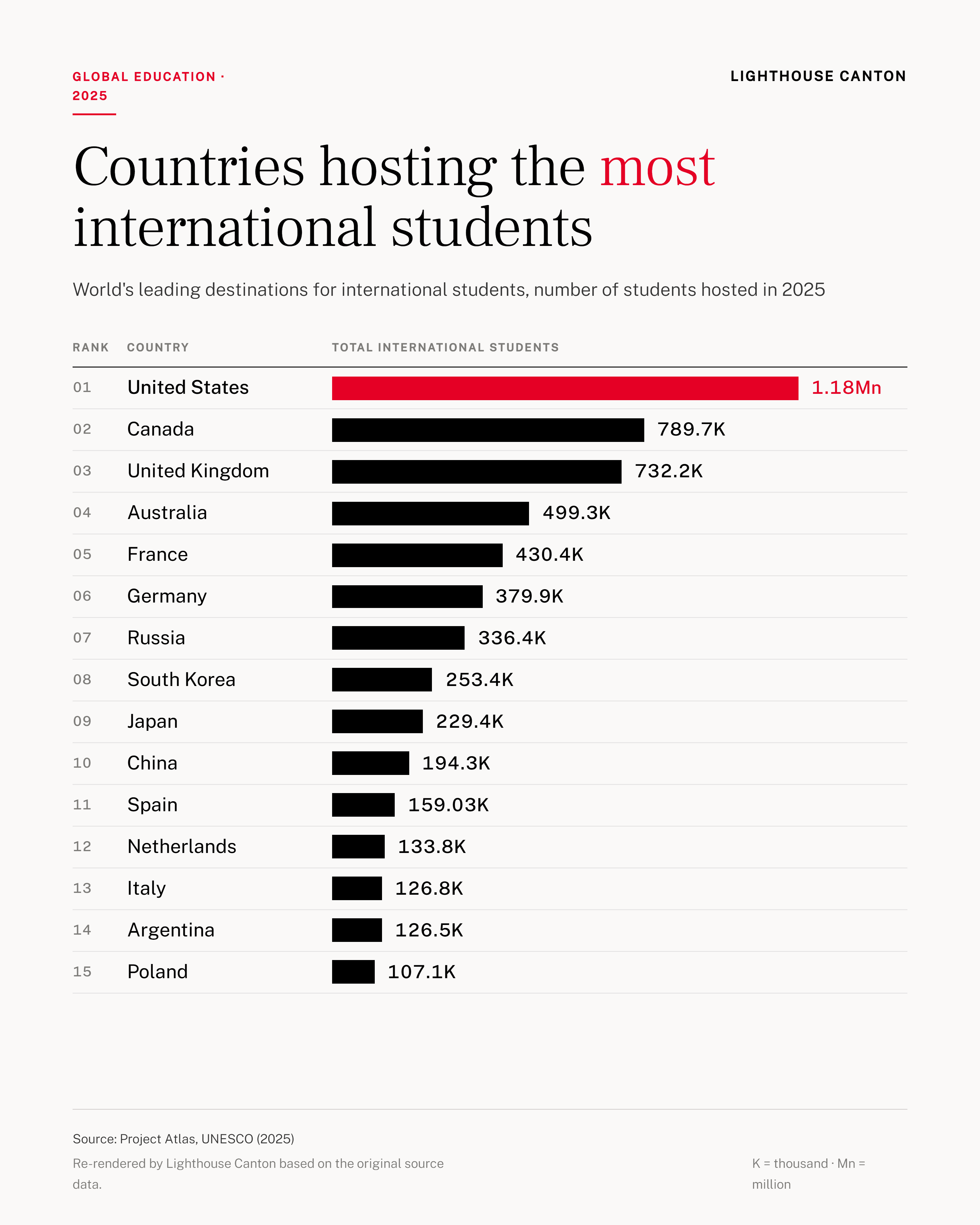
The scale of international education underscores its importance.
According to UNESCO, approximately 6.9 million students were pursuing tertiary education outside their home countries in 2022. While the figure captures university-level mobility, the decisions that eventually take students overseas often begin much earlier.
Why is education often the first wealth conversation?
Consider an Indonesian family relocating to Singapore with two school-age children. Buying a home may appear to be a natural next step, but the financial implications can be substantial.
For an Indonesian citizen purchasing residential property as a foreign individual without Singapore permanent residency, the Additional Buyer's Stamp Duty (ABSD) rate is 60% of the purchase price or market value, whichever is higher, subject to applicable rules and reliefs.
On a S$2 million property valued at the same amount, ABSD alone would amount to S$1.2 million, before Buyer's Stamp Duty and other transaction costs.
That changes the calculation between renting and buying, particularly if the family's longer-term plans remain uncertain. If the children subsequently pursue university or careers elsewhere, the family may need to reassess its residential arrangements and the location of its assets.
For wealth holders, education decisions can create financial commitments extending well beyond school fees.
Good planning preserves optionality
Education pathways are often determined well before examination results are released. Curriculum choices, assessment methods and university entry requirements can influence which opportunities remain available to students.
"There isn't just one route to success. There are many internationally recognised pathways that can help students reach excellent universities and rewarding careers," Lee shared.
Different children thrive in different environments. Some flourish in highly structured academic systems, while others benefit from more interdisciplinary or experiential approaches.
There is no universal blueprint. Some families prioritise academic grounding alongside bilingual capabilities and cultural familiarity and then seek broader global exposure through university or early career opportunities.
Others may favour entrepreneurship, or industry-specific expertise from an earlier stage. Success is defined by a sequence of experiences that equips the next generation to operate confidently across cultures and markets.
"When children are younger, many parents want them to develop strong foundations in a safe and structured environment. As they grow older, they become more comfortable giving them the freedom to explore opportunities overseas," Lee observed.
The common thread is intentionality.
Families are thinking less about the next admission cycle and more about where their children are likely to live, work, lead and contribute over the coming decades.
A co-ordinated approach to wealth planning
For internationally mobile families, education decisions can create financial and legal considerations across multiple jurisdictions. Property ownership, tax arrangements and business succession may all need to be reassessed as children study, work and eventually settle in different countries.
For Lighthouse Canton, the role of a wealth manager is to help families identify these implications early, frame the relevant financial questions and coordinate advice from appropriate specialists. This allows families to assess how individual decisions fit within their broader wealth and succession plans.
Frequently Asked Questions
Q1: Why does education planning matter for family wealth strategy?
Education decisions are often the first trigger point for broader wealth conversations. Choosing where a child studies can shape decisions on relocation, property purchases, healthcare structures, and eventually where family wealth and business interests are based.
Q2: Is there one "best" education pathway for globally mobile families?
No. There are many internationally recognised pathways to strong universities and careers. The right pathway depends on a child's individual strengths; some thrive in structured academic systems, others in interdisciplinary or experiential environments.
Q3: What role does a wealth manager play in education planning? Rather than answering every specialised question directly, a wealth manager like Lighthouse Canton helps families ask the right questions early and connects them with the right specialists , spanning legal, tax, healthcare and governance considerations across jurisdictions.
Disclaimer: Lighthouse Canton Pte Ltd. (“LCPL”) is incorporated in the Republic of Singapore (Registration No: 201422117K) and regulated by the Monetary Authority of Singapore (Capital Markets Services Licence No. CMS100443). Lighthouse Canton Capital (DIFC) Pte Ltd (“LCC”) is incorporated in Dubai International Financial Centre (Licence No. CL 2614) and regulated by Dubai Financial Services Authority (Category 3C Licence No. F004068). The financial products offered by LCPL and LCC are only available to Accredited Investors and Institutional Investors as defined by MAS and Professional Investors as defined by DFSA. The information in this electronic transmission does not constitute an offer, or intention by, or on behalf of LCPL and/or LCC, to subscribe, purchase or sell any financial products and/or services. LCPL and LCC accept no liability for any loss arising from the use of any information contained herein. The contents of this email are confidential and meant for the intended recipient only.