Venture Debt & Structured Credit Discipline
A paradox has emerged in the global credit landscape for 2026: "riskier" emerging markets may now be structurally safer than their developed counterparts.
In the US and Europe, the private credit boom has been fuelled by aggressive, "covenant-lite" structures, with leverage ratios often soaring to 6–7x EBITDA.
In contrast, the Asian private credit market has remained disciplined, almost conservative. Lenders here operate with significantly lower leverage (capped typically at 3x), heavy collateralisation, and strict maintenance covenants. For investors in 2026, this offers a compelling proposition: high yields that rival or exceed US distressed debt, but with credit protections akin to traditional bank lending.
This conservatism is not accidental, it is cultural and regulatory.
Asian lenders, shaped by prior credit cycles and less accommodative bankruptcy regimes, have consistently underwritten to downside protection rather than financial engineering. As a result, default recovery assumptions in Asia remain materially higher than comparable Western credits.
In the venture ecosystem, we are witnessing a maturation of the borrower mindset. The "growth at all costs" era is dead.
Tech companies in the region, including major players like Grab and Shopee, have pivoted decisively to cash-flow positivity. This shift has birthed a massive opportunity for non-dilutive capital.
As equity markets remain selective, founders are increasingly using debt not just for runway, but for strategic equity consolidation.
We are seeing a wave of "Pre-IPO financing grow in the region, " where founders borrow to increase their stakes 12–24 months prior to a listing, betting on the arbitrage between private valuations and public listing gains.
This marks a fundamental shift in how debt is perceived, from defensive capital to an offensive balance-sheet tool.
In India, we are seeing a growing number of technology and new-economy companies choosing to list in Indian indices, deepening domestic capital markets and creating incremental, well-timed opportunities for growth lending and structured pre-IPO financing.
Sector-wise, the demand for capital in 2026 is bifurcating. On one side, asset-heavy industries—specifically data centers and energy transition infrastructure, are devouring credit to fuel the AI and green energy boom. On the other, asset-light tech companies are seeking working capital to bridge the gap to profitability.
Beyond the large-cap and late-stage universe, less crowded markets are also becoming increasingly relevant. In Southeast Asia, a growing pool of mid-market companies, often requiring US$10–50 million of capital, operate with stronger balance sheets and lower leverage, yet remain underserved as banks focus on larger, marquee borrowers.
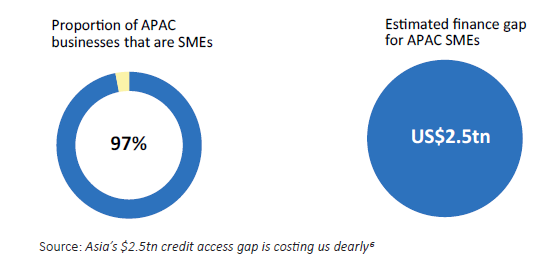
Source: AIMA Private Credit in Asia Report 2025
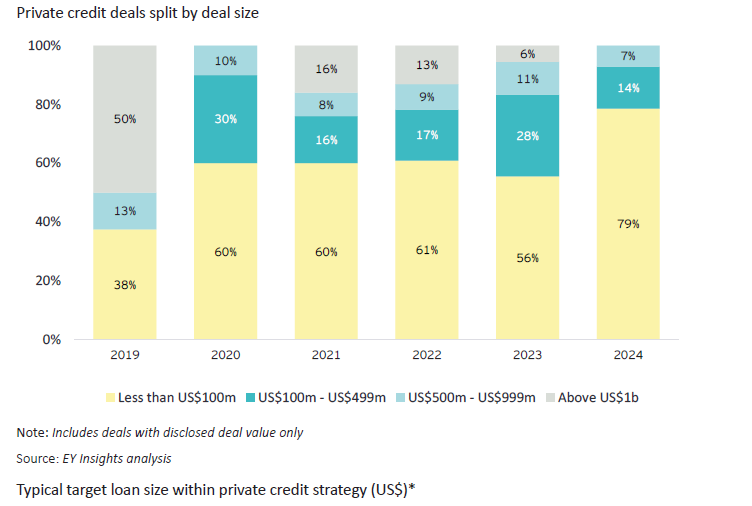
Source: AIMA Private Credit in Asia Report 2025
For disciplined lenders, this segment offers attractive risk-adjusted returns without the competitive intensity seen in more mature credit markets.
Unlike the US, where private credit growth has been explosive, Asia’s growth in 2026 will be "steady and compounding, " driven by fundamental business needs rather than financial engineering. In a late-cycle global environment, this slower, covenant-driven expansion may ultimately prove to be the safer path.





.png)