From Silicon Valley boardrooms to Dubai family offices and London private capital firms, the Indian diaspora has become one of the most influential economic forces of the 21st century. Yet the financial infrastructure serving these globally mobile families remains fragmented across jurisdictions, advisers and institutions. As wealth increasingly moves across borders while remaining tied to India, a new race is emerging to build the connective tissue between global capital and local roots.
This piece examines the scale of the Global Indian economy, the cross-border wealth management challenge, and how Lighthouse Canton is beginning to build integrated solutions for this segment
When Satya Nadella took charge of Microsoft, Sundar Pichai rose to lead Google, Arvind Krishna assumed the helm at IBM, and Shantanu Narayen continued Adobe's transformation; they reinforced a trend that had been building for decades.
Indian talent is no longer participating in global capitalism. It is helping run it.
The story extends well beyond Silicon Valley.
Ajay Banga now leads the World Bank. Leena Nair heads Chanel. Nikesh Arora runs one of the world's most valuable cybersecurity companies.
Across finance, healthcare, manufacturing, and technology, Indian-origin executives increasingly sit at the center of global decision-making.
The economic footprint behind that influence is enormous.
India's diaspora today exceeds 35 million people globally, making it one of the world's largest overseas populations. The World Bank estimates India received approximately $129 billion in remittances in 2024, retaining its position as the world's largest recipient. Non-resident Indian deposits have crossed $150 billion in recent years, while India continues to rank among the largest sources of internationally mobile millionaires.
Taken together, these figures point to something larger than migration.
A Global Indian economy is emerging.
Its centres of gravity span the United States, United Kingdom, UAE, Singapore, Australia, Africa, Canada, and increasingly parts of Europe. Its participants include technology founders in California, hedge fund managers in London, business entrepreneurs in Singapore, second-generation family businesses in Dubai, and private investors who may have spent decades overseas but continue to maintain deep financial ties with India.
Unlike some diaspora communities whose wealth gradually becomes disconnected from their country of origin, Indian capital has remained unusually intertwined with India. Record remittance flows, growing NRI deposit balances, and continued investments into Indian businesses, property and financial assets suggest that economic ties often deepen rather than diminish as wealth accumulates overseas.
That creates a unique financial profile.
The wealth is global.
The obligations, opportunities, and family connections remain deeply local.
As Shilpi Chowdhary, Group CEO of Lighthouse Canton, puts it, "We are an Asian outfit that has deep roots in an Asian ecosystem. We have access to global markets, and a lot of Asian diasporas are living overseas. They have home biases; they have home challenges that nobody is addressing in a meaningful way."
India is one of the biggest examples of this untapped Asian diaspora.
“Global Indians are becoming a very important segment. It's not just because of the size of the diaspora. Their aspirations, investment needs, and financial lives are increasingly global while remaining connected to India," explained Chowdhary.
Also read: How India's business families are breaking free of concentration risk

Global Indian Wealth: Key Numbers
- 35 million+ Indians in the diaspora globally
- $129 billion in remittances received by India in 2024 (World Bank)
- $164 billion+ in NRI deposits
- Family offices in India: 45 in 2018 → 300 today
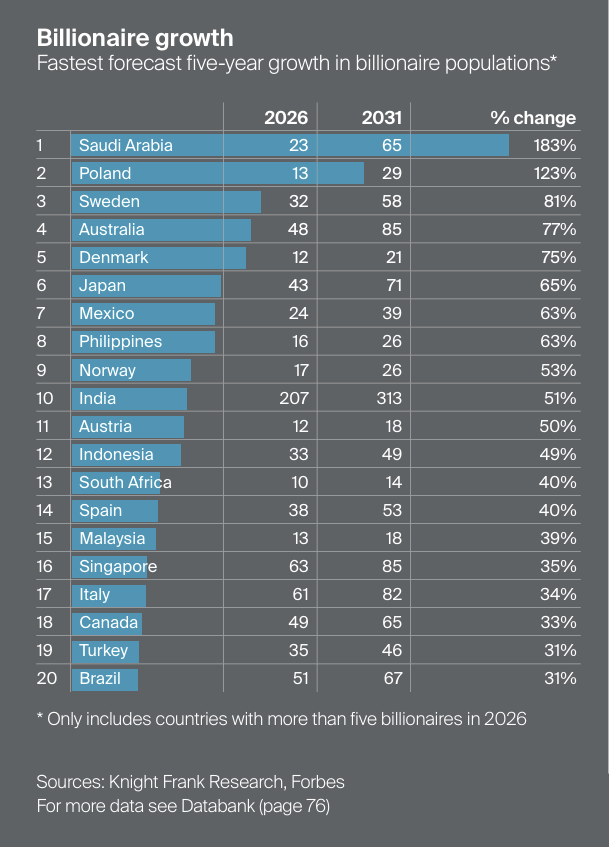
- India's UHNW population expected to grow 50%+ by 2028, fastest globally
Why Cross-Border Wealth Is Harder to Manage Than It Looks
For many wealthy families, investment management is no longer the hardest part of managing wealth.
Coordinating assets, advisers, tax obligations, estate structures and capital flows across multiple jurisdictions often proves far more complicated.
Global banks have long served internationally mobile clients. Traditionally, however, these relationships were coordinated through networks of country teams and booking centres. A client might maintain relationships across Singapore, London, New York and Mumbai, with coordination taking place largely through bankers and advisers rather than integrated technology.
That model remains effective in the past!
What has changed now is the emergence of a much larger pool of globally mobile entrepreneurs, executives, and business owners whose wealth now spans multiple jurisdictions but whose needs sit somewhere between local wealth management and the infrastructure of a multinational private bank.
The challenge is not a lack of expertise. The challenge is that expertise is often distributed across different institutions, advisers, and jurisdictions.
Chowdhary believes the industry's structure itself contributes to the problem.
"Most providers can address one part of the wealth holders’ lives. Somebody may be strong on investments, somebody on banking, and somebody on local advice. But clients increasingly need those things to come together."
The consequences are rarely visible until a trigger event occurs.
These issues are becoming increasingly common across the India-US, India-UK, and India-UAE corridors.
"Indian families living outside India struggle with repatriation of money even when it is allowed seamlessly. They have issues related to wills and trusts and nominations in India. Somebody has to address that. Especially the US-India corridor—there are so many tax issues," says Chowdhary.
The observation reflects a shift taking place across private wealth globally.
Clients increasingly want fewer relationships, fewer friction points, and greater visibility across their entire financial lives.
Also read: Lighthouse Canton's North Asia Strategy: Taiwan AI Partnership Signals New Growth Push
Building the Infrastructure for Global Indian Wealth
This is where Lighthouse Canton’s Global Indian story begins to move beyond demographics and into infrastructure.
For decades, the financial industry largely organised itself around jurisdictions because that reflected how wealth was created. Today, wealth is increasingly created in one country, invested in another, and ultimately transferred across several more.
The question is who can connect them effectively.
For Lighthouse Canton, the answer lies in building around the client rather than around individual markets.
"We're saying the global portfolio and your local portfolio should reside in the same place," Chowdhary explains. "You should be able to do exactly what you do with your global portfolios with the entire portfolio."
For Chowdhary, timing is critical.
"This initiative would not have been possible for us five years ago. We first had to build the global capabilities, the technology and the ecosystem before we could connect the two sides together."
The significance of the ambition extends beyond technology.
It reflects a broader recognition that globally mobile wealth increasingly requires both local understanding and international reach. Many institutions excel at one side of that equation. Few have built meaningful capabilities across both.
"Very few companies have the ability to be global and local at the same time," he says. "When it comes to India, we are local. When it comes to global markets, we have built those capabilities as well."
That balance may ultimately become the defining challenge of the next era of wealth management, and the one that Lighthouse Canton is now filling with its recently launched Global Indian Initiative.
“When we started, we were local, becoming global. Today we are global and leveraging on local. That's a very different journey," Chowdhary concluded.
Further reading: India’s HNI money is going global: Here are the trends
Frequently Asked Questions
Q: What is the Global Indian Initiative by Lighthouse Canton?
A: Lighthouse Canton's Global Indian Initiative is designed to serve the cross-border wealth management needs of Indian diaspora families by integrating their global and local portfolios within a single relationship. The firm combines its Asian roots with international market access to address pain points including repatriation, cross-jurisdictional estate planning and unified portfolio visibility — needs that few wealth managers have built the infrastructure to address simultaneously.
Q: Why are Indian family offices growing so rapidly outside India?
A: The number of family offices in India has grown from 45 in 2018 to approximately 300 today, driven by rapid wealth accumulation and a desire to diversify globally. Indian UHNW families increasingly use offshore structures in Singapore, Dubai and Hong Kong for asset protection, succession planning and access to global private markets. Various estimates suggest that allocations to private equity, venture capital and private debt have increased significantly in the past five years among this segment.
Q: What is the size of the Global Indian diaspora and their economic footprint?
A: The Indian diaspora exceeds 35 million people globally, making it one of the world's largest overseas populations. India received approximately $129 billion in remittances in 2024, over 3% of GDP, retaining its position as the world's largest remittance recipient. NRI deposits have surpassed $150 billion, and more than 13,200 Indians have a net worth exceeding $30 million.





.png)